When did “reliable” become “always available”?
“Can you take this on?”
“Of course.”
Another evening quietly disappears.
Being helpful earns approval.
Say yes before checking your capacity.
“What should we deprioritize?”
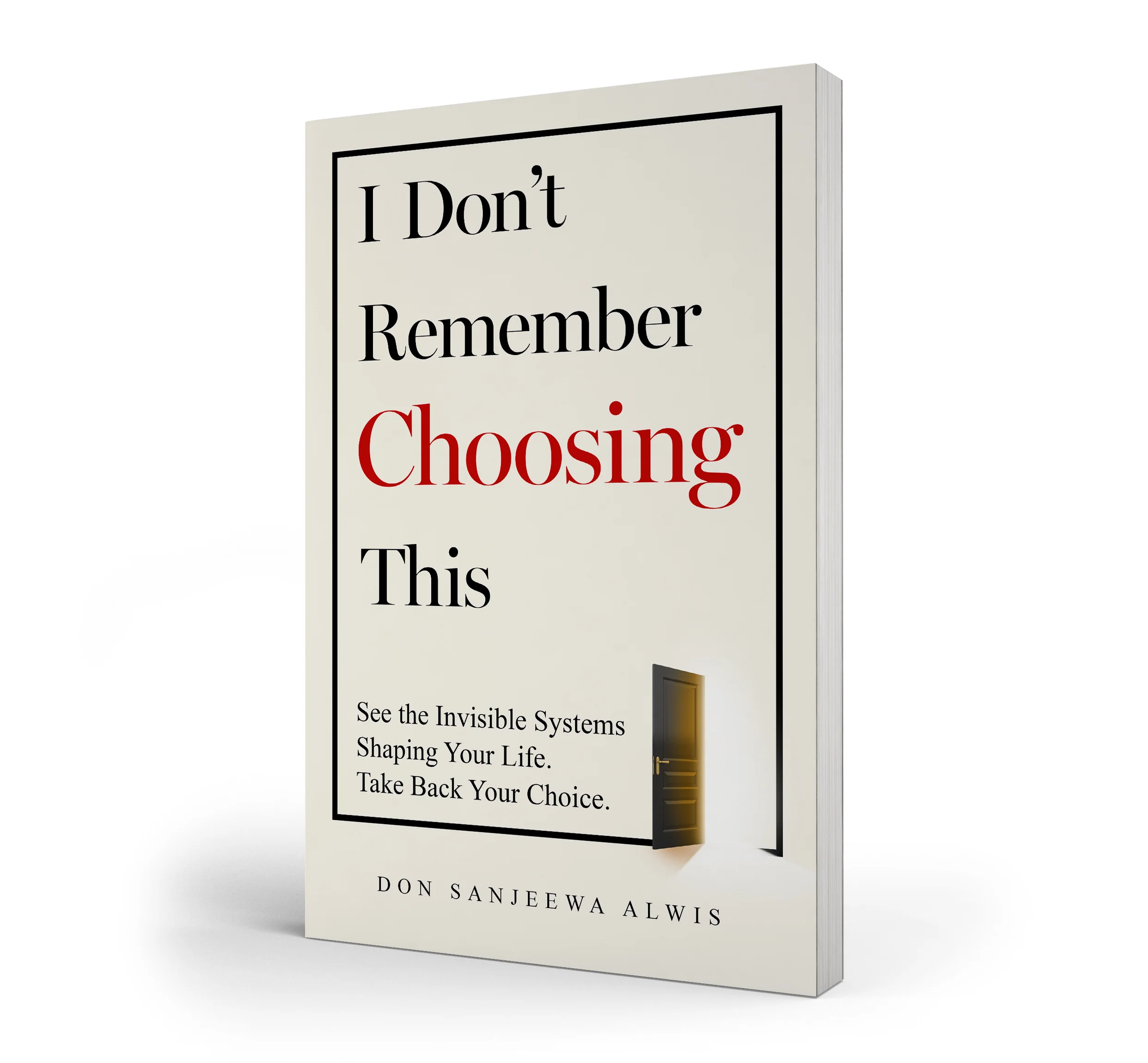
I DON’T REMEMBER CHOOSING THIS
For anyone who keeps meeting expectations—and wonders where their own choices went.
Through everyday stories and practical tools, learn to question the rules, catch automatic reactions, and make room for what matters to you.
WORK. FAMILY. THE LIFE YOU’RE LIVING.
At work, you take on more. At home, you keep everyone going. Online, someone else always seems ahead.
The book calls the rewards and unwritten rules behind these moments a Frame—and your automatic response a Default. Seeing both gives you a place to begin.
Where do you recognize yourself?
“Can you take this on?”
“Of course.”
Another evening quietly disappears.
Being helpful earns approval.
Say yes before checking your capacity.
“What should we deprioritize?”
“You’ll sort it out, won’t you?”
“Leave it with me.”
Your plans become the flexible ones.
Being dependable means keeping things together.
Take responsibility before asking who can help.
“I can do this part. Who can take the rest?”
“Everyone else is moving ahead.”
“I should be doing more.”
A life that felt enough suddenly doesn’t.
Visible achievement attracts attention.
Measure your day against someone else’s highlight.
“What matters to me when I close this?”
Start with one pattern.
Find one choice you can make differently.
INSIDE THE BOOK
Three parts. Ten chapters. A way to look at your life with different questions.
See.
Catch.
Choose.
Notice what your work, relationships, and attention are teaching you to value.
Frame Audit · Conversion Test
Recognize the response that arrives before you have time to choose.
Default Map · Quiet Parts Inventory
Pause, test another option, and build a small system you can shape.
The Pause · Four Questions · Reposition
THE OPENING PAGES
She has the proof. The results. The projects she rescued. So why does doing more keep leading to more of the same?
Read the opening →CHAPTER ONE · THE FRAME IS NOT DESTINY
Maya had brought proof.
Not feelings. Not complaints. Not a vague sense that she was tired. Proof.
She had the delivery numbers, the client emails, the risk log, the weekend escalations, and the three projects she had pulled back from the edge before anyone above her knew they were close to falling.
She had even rehearsed how to say it without sounding defensive.
That was Maya’s specialty: preparing for other people’s discomfort.
From I Don’t Remember Choosing ThisTRY IT IN YOUR OWN LIFE
Choose one setting in your life. Look at what earns approval, what gets discouraged, and what quietly decides the outcome.
A QUESTION YOU CAN START WITH
Begin with what feels familiar. Each guide offers a practical way to explore the ideas in your own life.
Make room to check your capacity, clarify ownership, and choose your response.
Read the guideExamine the role you play and find a more sustainable way to help.
Read the guideLook at the rewards you pursue and try one small change in direction.
Read the guideI DON’T REMEMBER CHOOSING THIS
Coming soon to Amazon. Wider distribution planned through IngramSpark.
Read a few pages while you wait.